
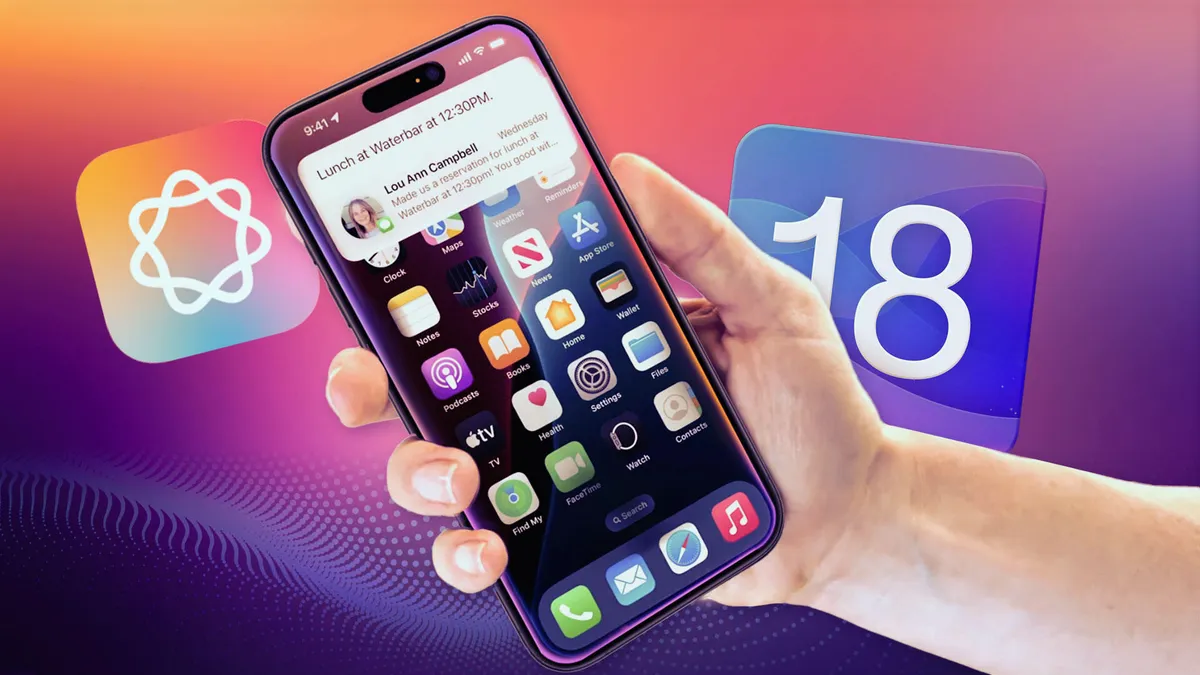
A recent CNET survey reveals that a quarter (25%) of smartphone users find AI features unhelpful, while 45% are unwilling to pay a subscription fee for AI capabilities. Privacy concerns are also prominent, with 34% of users citing it as a primary reason to avoid AI. This data emerges just as Apple prepares to launch its Apple Intelligence suite with the iPhone 15 Pro and upcoming iPhone 16, featuring advanced AI tools like an enhanced Siri, AI-assisted writing, and ChatGPT integration.
Despite increasing AI features from tech giants Apple, Google, and Samsung, the survey shows AI is still not a primary motivator for upgrading smartphones. Only 18% of respondents cited AI as a reason to upgrade, while more common motivators included longer battery life (61%), increased storage (46%), and improved camera features (38%). This indicates that AI, while prominent in new devices, may not yet align with the everyday needs of many smartphone users.
AI Features and Consumer Interest: Is AI a Selling Point?
AI has become a focus of new smartphone models, with manufacturers increasingly spotlighting these capabilities. Google’s Pixel 9 lineup boasts the Gemini LLM with features like conversational responses from Google Assistant, while Samsung promotes its Galaxy AI for simplifying tasks such as translation and photo editing. Apple’s Apple Intelligence suite promises similar innovations. However, the survey reveals a divide in consumer interest, as 52% of smartphone users are indifferent to purchasing a foldable phone and, similarly, many remain unconvinced by AI as a value-adding feature.
This cautious adoption may be linked to the AI’s visibility; unlike subtle integrations such as camera enhancements or voice assistants, the new AI features are more explicit, requiring user input. As a result, it may take time for users to fully embrace this more interactive form of AI.
Consumers Reluctant to Pay for AI Features
Subscription costs are another hurdle. Nearly half (45%) of respondents stated they would not pay extra for AI capabilities. This reluctance to subscribe could be linked to subscription fatigue, as American consumers reportedly spend an average of $91 monthly on various services, with many facing price hikes in recent years. Google’s Pixel 9, for instance, requires a subscription to unlock advanced Gemini AI features, and Samsung’s Galaxy AI services will only remain free until the end of 2025. Apple, too, may eventually introduce fees for its AI-powered functionalities.
Privacy Concerns Surround AI on Smartphones
Privacy remains a significant concern, with 34% of smartphone users worried about how AI may handle sensitive data. In response, tech giants have emphasized privacy-first approaches for their AI. Apple’s on-device AI processing is designed to minimize data transmission by performing tasks directly on the iPhone, sending data to Apple Silicon servers only when necessary and without storing it. This approach aims to ensure secure and private AI usage for users concerned about data exposure.
Top Reasons for Smartphone Upgrades
While AI continues to gain attention, the survey shows that it ranks low on the list of motivations for upgrading devices. Leading reasons include longer battery life, more storage, and better cameras. Other motivating factors included display quality and size (32%), platform loyalty to iOS or Android (24%), and even phone color (10%).
High smartphone prices also contribute to the slower upgrade cycle. Most flagship phones cost between $800 and $1,200, prompting users to retain their devices longer. A significant 44% of users only upgrade when their phones require replacement, while 30% keep their devices for three years or longer. Interestingly, iPhone users are particularly likely to hold on to their phones, with one-third keeping their devices for three or more years.
Foldable Phones: Interest Remains Lukewarm
Despite recent foldable phone releases like the Google Pixel 9 Pro Fold and the Samsung Galaxy Z Flip and Fold 6, interest remains modest. More than half of smartphone users (52%) reported no interest in purchasing a foldable phone. This presents an opportunity for Apple, which has not yet released a foldable iPhone, to potentially reshape the market if it enters the space in the coming years.